How to Unclog a Conair Clothes Steamer
To unclog a Conair steamer, run a mix of distilled water and plain white vinegar through the water tank and steam path, then flush it with clean water and steam it dry. Clear the nozzle gently, and repeat the flush if steam still sputters.
On this page (9 sections)
- What actually causes a Conair steamer to clog?
- What supplies do you need to clear a Conair steamer?
- How to unclog a Conair steamer step by step
- Why does my steamer spit or drip water?
- How do you clear the nozzle and steam holes?
- Can you prevent a Conair steamer from clogging again?
- When should you stop flushing and call Conair?
- Does the soleplate need cleaning too?
- What's the shortest path back to steady steam?
To unclog a Conair steamer, run a mix of distilled water and plain white vinegar through the water tank and steam path, then flush it with clean water and steam it dry. Clear the nozzle gently, and repeat the flush if steam still sputters.
Knowing how to unclog a Conair steamer is mostly about patience and routine, not tools.
Most clogs come from mineral scale, not lint. Tap water leaves calcium behind every time it boils, and that film narrows the path until steam slows to a whisper.
What actually causes a Conair steamer to clog?
A Conair steamer clogs because mineral scale from tap water builds up in the tank, the heating channel, and the nozzle. It's rare for a steamer to fail from a single bad event; the blockage grows over weeks.
Hard water carries more calcium and magnesium, so it scales faster. Soft water still leaves some residue, just slower.
Two smaller culprits add to the scale. Fabric fibers and lint can collect at the nozzle from repeated contact with clothes.
And a tank left full between uses gives minerals more time to bond to the walls.
The fix follows from the cause: dissolve the scale, flush it out, and stop feeding it fresh tap water every week.
How do you tell scale apart from lint?
Scale blocks the water path, so the unit runs hot with little steam coming out. Lint and fiber usually sit right at the nozzle opening, and you can see a gray or white crust there.
Touch the tip with a clean tissue after the steamer cools. If the tissue comes back gritty, that's scale.
If it comes back with fuzz or threads, it's fabric debris.
What supplies do you need to clear a Conair steamer?
You need plain white vinegar, distilled water, a cup, and a soft brush or toothpick. That's the entire list, and none of it costs much.
Use white vinegar only, not apple cider or cleaning vinegar blends. The clear type rinses out cleanly and won't leave a smell on fabrics.
Skip harsh descalers unless Conair support tells you otherwise. Strong acids can attack seals inside the tank.
A soft bottle brush helps reach the tank opening, and a pick clears the nozzle. Never poke the steam holes with a metal pin, because a widened hole ruins the spray pattern.
How to unclog a Conair steamer step by step
The full job runs in five steps: cool it down, mix the flush, run it hot, clear the nozzle, and rinse. Set aside about 30 minutes, most of it waiting.
- Unplug the steamer and let it cool for at least 20 minutes.
- Empty the tank and refill it with equal parts distilled water and white vinegar.
- Power it on, use the highest steam setting, and let it run for about 5 minutes.
- Switch it off, let it sit for 15 minutes so the vinegar works on the scale, then steam again until the tank empties.
- Refill with plain distilled water and steam until empty to rinse.
Repeat the cycle once if the flow is still weak. Most mild clogs clear on the first run.
Why does my steamer spit or drip water?
A steamer that spits water instead of steam has a partly blocked heating channel, so liquid arrives before it can fully turn to vapor. The scale narrows the channel and the water races past the hot surface.
Flush with the vinegar mix and then give the unit a longer heat-up before you point it at a garment. Also check that you haven't overfilled the tank past the max line, since liquid sloshes into the outlet.
If spitting continues after two flushes, the element may have a scale crust that home flushing won't shift. Contact Conair support before you keep steaming.
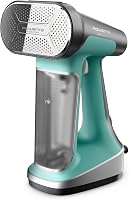
The Conair 3-Attachment Handheld Steamer holds 7.3 ounces and runs up to 20 minutes of continuous steam. Its removable tank pulls off for emptying and rinsing without tipping the whole unit.
Conair's Dry Steam Technology is designed to vaporize water fully, which helps prevent the spitting that a scaled channel causes. The heated soleplate and built-in creaser let you press collars without a board.
The Bristle Brush and Delicate Fabric Spacer come in the box, so you can treat thick fabric and silk with one tool. Its 8-foot cord reaches a bedroom mirror or a curtain rod without an extension.
This is the model we'd point most households toward, especially in a hard-water area where a monthly flush pays off. Compare the whole line in our Conair steamer buying guide if you're still choosing.
How do you clear the nozzle and steam holes?
Clear the nozzle by wiping away fiber deposits and picking the holes gently with the soft brush or a wooden toothpick. Work on a cool, unplugged unit.
Hold the steamer upside down so loosened scale falls out rather than deeper in. A short burst of steam afterward confirms the holes are open.
Never drill, scrape with a knife, or soak the entire unit in water. The electrical parts are not waterproof, and water inside the housing can damage the unit.
Can you prevent a Conair steamer from clogging again?
Yes, you can prevent most clogs by steaming with distilled water and emptying the tank after every session. That single change extends the gap between flushes by months.
Distilled water has the minerals removed, so there is almost nothing to leave behind. The tank costs a little more per gallon than tap water, but it saves the descaling job.
Emptying the tank matters too. Standing water lets minerals settle and dry onto the interior walls, which is exactly what the vinegar flush has to fight later.
A quick 30-second rinse after every two or three sessions also keeps the outlet clear. That small habit is the whole routine.
The Conair Turbo ExtremeSteam Handheld Steamer steps from delicate up to a supercharged turbo setting, so you can match steam power to the fabric. A 40-second heat-up and up to 20 minutes of steam time suit a quick morning touch-up.
Its 9-foot cord gives more reach than most handhelds, and the 3-in-1 attachment covers a silicone band, a delicate spacer, and a bristle brush. Conair says this line has earned the Good Housekeeping Seal.
For travel, pack it dry and flush it with distilled water once you're home. Hotel water is often hard, so bring a small bottle of distilled if the trip is long.
Our Turbo ExtremeSteam review goes deeper on settings.
When should you stop flushing and call Conair?
Stop and call Conair support when the tank is full, the unit heats, and no steam comes out after two flushes. That pattern means the blockage is beyond the reach of a home descale.
Also stop if steam smells scorched, the unit clicks off within seconds, or water leaks from the seams. Each of these points to a failing element or seal, not a simple clog.
Conair backs the 3-Attachment unit with a limited two-year warranty, so keep the receipt and the model number (GS59L) in case support asks.
Don't open the housing yourself. The fix needs parts you can't buy at a hardware store.
Does the soleplate need cleaning too?
The soleplate needs a wipe after every few sessions, since starch and fabric finish bake onto the heated plate. A clean plate glides better and leaves no marks on light fabric.
The Faultless Hot Iron Cleaner works on a hot plate, which is why it suits this job. Let the steamer run until the plate is hot, then rub the cleaner over the surface as directed.
It removes starch buildup, patch glue, and melted synthetics from metal, Teflon, and Silverstone surfaces. The disc form makes it easy to target just the dirty area.
Wipe the plate with a damp cloth afterward so no residue transfers to clothes. Keep the cleaner away from the steam holes themselves.
If you're shopping for a new unit, our handheld garment steamer picks and best value clothes steamers cover the trade-offs between tank size, heat-up time, and cord length.
What's the shortest path back to steady steam?
The short answer to how to unclog a Conair steamer: flush it with a weak vinegar mix, clear the nozzle, then switch to distilled water. That covers nearly every home clog.
Do the full flush when steam weakens or spits. Do the quick rinse after most sessions, and empty the tank each time.
If you're buying new, choose the Conair 3-Attachment Handheld Steamer for a removable tank that's easy to keep clean. Pick the Turbo ExtremeSteam if you steam on the go and want the extra cord length.
Either way, the cleaner your water, the less often you'll be reaching for the vinegar.
Frequently asked questions
Can I use vinegar in a Conair steamer?
Yes, a diluted white vinegar flush is a common way to break down mineral scale inside a steam tank. Keep the mix weak, run it through on the highest steam setting, and flush with plain distilled water afterward so your clothes don't pick up a vinegar smell.
Why does my steamer sputter water instead of steam?
Sputtering usually means scale has narrowed the water path, so liquid gets pushed out before it fully vaporizes. Flush the tank with a vinegar mix, clear the nozzle, and let the unit cool between uses; if it still spits, repeat the flush a second time.
How often should I clean a handheld steamer?
Plan on a rinse after every two or three uses and a full vinegar flush about once a month if your tap water is hard. Steaming only with distilled water lets you stretch that flush to every two or three months.
Is a clogged steamer dangerous to keep running?
A clogged steamer isn't usually a fire risk, but blocked steam can push hot water out suddenly or overheat the element. If the tank is full and no steam comes out after a flush, stop using it and contact Conair support rather than forcing it.