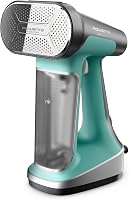
How to Use a Rowenta Handheld Steamer
Fill the tank, let the steamer heat up, then steam each garment from the top down with steady strokes. Keep the head in contact with the fabric and let the steam do the work.
On this page (9 sections)
- How do you use a Rowenta handheld steamer in six steps?
- What should you do before you fill the water tank?
- How long does a Rowenta handheld steamer take to heat up?
- How do you steam a shirt without stretching it?
- How do you steam pants, dresses and delicate fabrics?
- What are the common Rowenta steamer mistakes?
- How do you handle a 2-in-1 steamer and iron?
- How do you clean and store a Rowenta handheld steamer?
- How should you pick the right Rowenta handheld steamer?
Here's how to use a Rowenta handheld steamer: fill the tank, let it heat up, then steam each garment from the top down with steady strokes. The head touches the fabric, the steam does the work, and you finish with the brush or crease tool for the details.
The order matters more than the technique. Water first, heat second, garment third, and a short pause before you put the piece away.
How do you use a Rowenta handheld steamer in six steps?
Fill, plug in, wait, hang, steam top-down, and let it air dry is the basic order. The first two steps stop most beginner mistakes before they start.
- Fill the removable tank with tap water and seat it firmly.
- Plug in the steamer and wait for the heat-up signal.
- Hang the garment on a hanger or door hook so it hangs free.
- Press the steam trigger and glide the head from the shoulder down.
- Work the brush or crease attachment into collars, cuffs and hems.
- Hang the piece for a minute so any dampness lifts.
Keep the steamer upright during use. The tank sits in the handle, so tipping the head past horizontal can stop the water feed.
If you want a wider comparison before you buy, see our roundup of the best handheld garment steamers.
What should you do before you fill the water tank?
Use tap water unless your manual says otherwise, and don't overfill past the max line. A firm seat on the tank matters more than the water type.
The XCEL Steam Force holds 6.4 ounces in a removable 190 ml tank. The Pure Force 2-in-1 carries 7.1 ounces.
A bigger tank means fewer refills but more weight in your hand.
Fill over a sink so drips don't land on the steamer body. Wipe the outside dry, then press the tank in until it clicks.
A loose tank is the usual cause of weak steam or sputtering.
Skip distilled water only if your manual allows tap water, and skip fabric softener or scent additives entirely. Those belong in the wash, not the steamer tank.
How long does a Rowenta handheld steamer take to heat up?
Heat-up runs from about 10 seconds to 35 seconds depending on the model. Use that window to hang the garment and set up your station.
The XCEL Steam Force is ready in 25 seconds. The AeroSteam Twist takes 30 seconds, and its thermostat control keeps steam consistent once it starts.
The Pure Force 2-in-1 heats in 10 seconds.
Wait for the ready light rather than counting seconds. A steamer that's still warming will drip instead of steam.
If your model has an auto-off safety feature, it may shut down when set down, so lift it and press the trigger again.
Hold the steamer upright while it heats. Setting it on its base is fine on models with a self-standing base, like the AeroSteam Twist.
How do you steam a shirt without stretching it?
Hang the shirt and steam from the collar down in one direction. Steady strokes and light contact remove creases without pulling the fabric out of shape.
Start at the shoulders and collar, then work down the front panels. Pull the shirt taut with your free hand below the steam head so the fabric stays flat.
Move the head slowly, about an inch per second.
Steam the back and sleeves last. For cuffs and plackets, switch to the crease attachment so the folds stay sharp instead of rounded.
Don't press the head hard against the cloth. The steam needs a little room to pass through.
If the fabric gets damp, keep going; the garment dries as you work.
How does the fabric-grip suction change the stroke?
The AeroSteam Twist uses 3300 Pa suction to hold the fabric against the heated head, so you can steam one-handed. That changes the stroke: you guide the head rather than pull the cloth.
Its 360° Opti-Flow suction pulls the garment close as steam flows. With three settings up to 20 g/min, you pick Steam Only, Steam + Soft Suction or Steam + Strong Suction for delicates, everyday fabrics or thick garments.
The rotating 7 sq. in. heated ceramic head reaches hems, cuffs and collars at angles a flat steamer can't.
Keep your fingers clear of the head while the suction holds the fabric in place.
If you want to see how this model stacks up against another brand's flagship, our Conair Turbo ExtremeSteam review covers the rival option in detail.
How do you steam pants, dresses and delicate fabrics?
Steam pants from the waistband down and dresses from the shoulder down, using the lowest setting on delicates. Gravity does half the work when the garment hangs free.
For trousers, clip the hems so the legs hang straight. Steam the waistband and pockets first, then run the head down each leg.
Use the crease attachment to set a front crease if you want one.
Dresses and skirts get the same top-down stroke. Let the fabric hang without bunching it in your hand, and steam pleats with the head following the fold.
Silk, rayon and other delicates need the lowest steam setting and a light touch. Rowenta lists the XCEL Steam Force as safe for all fabrics, including silk.
Hold the head a little farther from the cloth and keep it moving. Our guide to how to use a fabric steamer on clothes covers the fabric-by-fabric settings in more depth.
Which accessories should you use, and when?
Use the fabric brush for heavy fabrics, the crease attachment for folds and the steam bonnet for delicates. Each one changes how the steam meets the cloth.
The XCEL Steam Force ships with four accessories: a fabric brush, a steam bonnet, a door hook and a crease attachment. The door hook turns any door into a hanging point when you don't have a rod.
Snap on the brush for wool coats and thick cotton. Use the crease attachment on shirt sleeves and trouser fronts.
Fit the bonnet over the head to soften the steam for silk and knits.
Take the attachment off before you store the steamer. A brush left on can collect lint and block the steam vents.
What are the common Rowenta steamer mistakes?
The usual mistakes are overfilling the tank, steaming upward and holding the head still in one spot. Each one causes drips, weak steam or a wet patch.
Steaming upward pushes moisture back toward your hand and can stretch light fabrics. Keep the head above the fabric's lowest point and work down.
Holding the head still lets one area take too much steam. Keep it moving even when you're focused on a stubborn wrinkle.
If a crease won't budge, go over it twice rather than pressing harder.
Don't steam clothes you're wearing. The steam is hot and the head gets warm.
Hang the piece on a hanger or door hook and step back.
Let the garment dry for a minute before you fold it into a drawer. Slightly damp fabric can crease again as it settles.
How do you handle a 2-in-1 steamer and iron?
Use vertical steaming for hanging garments and switch to horizontal ironing for flat pieces. A 2-in-1 gives you both modes in one tool, so you pick based on the garment.
The Pure Force 2-in-1 runs at 1875W with up to 90 g/min of steam and five settings for different fabrics. Its continuous steaming mode means you don't hold a trigger for long sessions.
The 7.1 oz tank gives up to 12 minutes of steam without detergents or chemicals.
For a shirt on a hanger, use vertical steam. For a tablecloth or a stack of napkins, set the piece flat and use horizontal ironing on the larger soleplate.
The 8.5-ft cord and auto-off safety feature make both modes easier to manage.
How do you clean and store a Rowenta handheld steamer?
Empty the tank after each use and let the steamer cool fully before you store it. A dry tank and a clear head keep the next session drip-free.
Unplug the steamer and let it cool on its base. Pour out any leftover water through the fill opening.
Leaving water in the tank for weeks can cause mineral buildup and a stale smell.
Wipe the head and soleplate with a soft cloth once they're cool. Don't run water over the body or the cord.
If your model has a self-clean or descaling step, follow the interval in its instructions.
Coil the cord loosely rather than wrapping it tight around the handle. Store the attachments in a bag or box so the brush bristles keep their shape.
The AeroSteam Twist stands on its own base, which makes counter storage simple.
How should you pick the right Rowenta handheld steamer?
Match the model to how much you steam and what you steam most. A light travel steamer suits touch-ups; a 2-in-1 covers a household's full laundry load.
The XCEL Steam Force suits travel and quick morning touch-ups. Its 25-second heat-up and 10 minutes of continuous steam fit small loads and business trips.
The AeroSteam Twist suits shirts, suits and daily wardrobe care, with suction and a heated head for crisper results. The Pure Force 2-in-1 suits households that want vertical steaming and flat ironing from one tool.
Think about tank size, cord length and weight before you decide. A 1.4-pound steamer is easy to hold through a whole shirt; a 3-pound 2-in-1 does more but asks more of your wrist.
Whichever model you choose, the routine above works the same way. If you want to compare steamers across brands for a whole household, start with our guide to the best garment steamers for home use.
Frequently asked questions
Do you steam clothes from the top down or bottom up?
Steam from the top down so heat and moisture travel through the fabric in one direction. Bottom-up strokes can push steam back toward your hand and stretch light fabrics.
Can you use a Rowenta handheld steamer on silk?
Yes. Rowenta lists the XCEL Steam Force as safe for all fabrics, including delicate silk.
Use the lowest steam setting and keep the head moving so the fabric does not stay in one spot.
Do you need an ironing board to use a handheld steamer?
No. A handheld steamer works on garments hanging from a rod, door hook or hanger.
Some models, like the AeroSteam Twist and Pure Force 2-in-1, also offer a heated soleplate for a crisper finish.