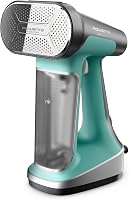
How to Clean a Rowenta Clothes Steamer
To clean a Rowenta steamer, empty the tank, run a 1:1 white vinegar and water mix through it for a short cycle, then rinse twice with plain water. Wipe the soleplate and steam holes, let everything dry, and descale every 1 to 3 months depending on your water.
On this page (7 sections)
- Why does a Rowenta steamer need cleaning at all?
- How do you descale a Rowenta steamer step by step?
- How do you clean the soleplate and steam holes?
- How often should you descale, and what changes the schedule?
- What mistakes turn a clean steamer into a damaged one?
- How do you keep a Rowenta steamer clean between descales?
- How should you store a Rowenta steamer after cleaning?
To clean a Rowenta steamer, empty the tank, run a mix of equal parts white vinegar and water through it, then rinse twice with plain water. Wipe the soleplate and steam holes, let the parts dry, and repeat the descale every 1 to 3 months.
Knowing how to clean a Rowenta steamer comes down to one job: getting mineral scale out before it blocks the steam path.
Scale is the main enemy. Every fill of tap water leaves a little calcium behind, and over weeks that crust narrows the holes in the head and coats the heating element.
The routine below works for handheld models and for the larger Rowenta steamers alike.
Why does a Rowenta steamer need cleaning at all?
Mineral scale, not dirt, is what clogs a Rowenta steamer. Tap water carries calcium and magnesium, and when the steamer boils that water the minerals stay behind as a chalky film.
That film builds on the heating element and inside the steam holes. The first sign is usually weaker steam or a longer wait before the unit is ready.
Later you may see white specks on a dark shirt, which is scale breaking free and riding out with the steam.
Fabric fibers and lint add to the problem. They stick to a damp soleplate or gather around the head, and they can block the small outlets.
A quick wipe after each session keeps that layer from baking on.
Rowenta builds an anti-calc function into some of its full-size models, but that slows buildup rather than replacing cleaning. Even with that feature, the tank and head still need a regular descale.
If you want to compare models with and without that function, our guide to the Conair steamer line shows how the same feature works on a rival brand.
How do you descale a Rowenta steamer step by step?
Run a vinegar and water mix through the steamer on a short cycle, then rinse it twice. This is the core of how to clean a Rowenta steamer, and it takes about 20 minutes plus drying time.
- Unplug the steamer and let it cool completely.
- Empty any water left in the tank.
- Fill the tank with equal parts white vinegar and water.
- Switch on and let the steamer run until the mix is used up.
- Refill with plain water and run a full tank to rinse.
- Repeat the plain-water rinse once more.
- Empty the tank and leave the unit open to dry.
Do the descaling over a sink or a towel, since the first burst of steam often carries loosened scale. Don't point the head at a garment until the mix is gone and the steam runs clear.
Vinegar is safe for the plastic tank and the metal element in normal dilution, and it breaks down the calcium film that water alone won't shift.
What if the steamer is a full-size Rowenta?
Full-size models follow the same idea but hold more water. The Rowenta Professional Full-Size Steamer has a removable 1.3 liter tank, so you can carry it to the sink instead of moving the whole unit.
Fill it with the vinegar mix, run it through, then rinse the tank twice and let it dry before you clip it back on.
Its anti-calc function is designed to cut mineral buildup in day-to-day use. That's a help, not a reason to skip the vinegar cycle.
A full-size steamer that runs 35 g/min of steam pushes a lot of water through the system, so it can scale up faster than a handheld if your water is hard.
How do you clean the soleplate and steam holes?
Wipe the soleplate while it's warm and clear the holes with a soft brush or a cotton swab. A clean plate glides over fabric and won't leave marks on light colors.
Let the head cool until it's warm to the touch rather than hot. Wipe the plate with a damp cloth and a little mild soap, then dry it.
Don't scrape with a metal pad, which scratches the nonstick surface and gives scale more places to grip.
For the steam holes, use a soft brush or a cotton swab dipped in white vinegar. Push gently into each outlet and twist.
If a hole stays blocked, a short vinegar run usually softens the plug enough to clear it on the next cycle.
For stubborn residue, a dedicated iron cleaner helps. The Faultless Hot Iron Cleaner comes as a small disc you rub over a warm plate.
Apply it to a warm soleplate, never a hot one, and let the head cool to warm to the touch first, just as you would for a routine wipe.
It's designed for soleplates and can be used on a warm steamer head, so read the directions and test on an inconspicuous spot first. It removes residue rather than scale, so keep the vinegar cycle for the inside of the unit.
How often should you descale, and what changes the schedule?
Descale every 1 to 3 months with hard water and every 3 to 6 months with soft water. How often you clean a Rowenta steamer depends more on your water supply than on the model.
Hard water leaves more calcium per fill, so the film forms faster. If you can see white crust around your faucet or kettle, assume hard water and lean toward the monthly end.
Soft water buys you more time.
Use patterns matter too. A steamer used daily on a family's work clothes will scale up faster than one pulled out once a week.
Watch for the early signs: weaker steam, a sputtering head or longer heat-up. Those tell you to descale now, whatever the calendar says.
Some owners switch to distilled water to slow the buildup. That's an option, though it costs more per fill.
Filtered water helps a little, but it doesn't remove all the minerals, so the descale cycle still matters.
What mistakes turn a clean steamer into a damaged one?
Skip bleach, dish soap and fabric softener, and never leave vinegar sitting in the tank. These are the habits that cause most steamer problems.
Bleach and soap leave residue that foams when heated and can block the steam path. Fabric softener coats the inside of the tank and the element.
Plain white vinegar and water are the only things that belong in the tank for cleaning.
Don't leave the vinegar mix in the tank after the cycle. Vinegar is mild, but sitting for days it can affect seals and plastic.
Empty it, rinse twice and dry the tank before storage.
Never fill the tank past the max line or run the steamer dry to "burn off" scale. A dry boiler overheats.
And don't submerge the unit or the electrical parts in water, since that's a shock risk, not a cleaning shortcut.
How do you keep a Rowenta steamer clean between descales?
Empty the tank after every session, wipe the head and store the unit dry. Small habits stretch the time between deep cleans and keep steam strong.
Pour out leftover water each time you finish. Standing water leaves minerals on the tank floor and can smell stale after a few days.
Leave the fill cap open so the inside dries.
Wipe the soleplate and head with a dry cloth once they cool. A lint-free cloth is best, since paper towels can shed fibers that stick to a damp plate.
Hang the steamer upright so any drops drain away from the head.
A stand makes this easier. The TONINT garment hanger holds the steamer head up and includes ironing gloves for holding fabric taut.
The three adjustable rods reach 63 inches and the hanger turns 360 degrees. It folds flat when you're done, which suits a closet or laundry corner.
A stand won't clean the steamer, but it keeps the head off the floor and lets it air out properly.
How should you store a Rowenta steamer after cleaning?
Store it cool, dry and upright with the tank empty and the cap off. A dry steamer is far less likely to grow odors or crust up between uses.
Let every part air-dry fully before you put it away. Trapped moisture in the head or tank encourages mold and leaves water spots that harden into scale.
If you store it in a cabinet, leave the door ajar for a day.
Keep the cord loosely coiled rather than wrapped tight around the unit. A kinked cord is a trip and wear risk.
Check the plug and cord for damage before the next use.
If you live where the water is very hard and you steam a lot, a monthly descale is the simplest schedule. If your water is soft and the steamer comes out rarely, a quarterly cycle is enough.
For most readers, cleaning a Rowenta steamer is a 20-minute job that keeps the steam output close to new.
If you're still choosing a model, our roundup of the best handheld garment steamers covers options that are easy to descale. Readers who want the most steam for the money can start with the best value clothes steamers before they buy.
Frequently asked questions
How often should I descale a Rowenta steamer?
Descale every 1 to 3 months if your tap water is hard, or every 3 to 6 months with soft water. A slow steam rate, white flakes on fabric or a spitting head means it's time, whatever the calendar says.
Can I use bleach or dish soap inside the water tank?
No. Bleach, dish soap and fabric softener leave residue that turns into foam or blocks the steam path.
Use plain white vinegar and water for descaling, and rinse the tank well before your next steaming session.
Why is my Rowenta steamer spitting white flakes onto clothes?
Limescale has broken loose inside the boiler or head and is riding out with the steam. Descale the unit, then steam over a sink or scrap cloth until the flakes stop before you point it at a garment again.
Should I unplug the steamer before cleaning it?
Yes. Unplug it before you open the tank or empty it, and let the interior cool completely.
The soleplate is the exception: wipe it while it's warm, not hot, as described in the soleplate section.
Cleaning a hot steamer risks burns from steam and hot water, and a cool unit is also easier to handle.