How to Use a Garment Steamer on a Dress
Hang the dress, fill the steamer, wait for full heat, then work the head top to bottom in short passes while you pull the fabric taut. Hold the steamer an inch or two off the cloth, keep the hem and any trim safe with the spacer, and let the dress hang to dry before wearing it.
On this page (10 sections)
- What should you prepare before you steam a dress?
- How do you heat the steamer and check the steam?
- How do you steam the body of a dress?
- How do you handle sleeves, pleats and the hem?
- Which dress fabrics are safe to steam?
- How do you steam a dress without burning it or leaving marks?
- What gear makes steaming a dress easier?
- How do you finish a dress after steaming?
- What mistakes should you avoid when steaming a dress?
- Which steamer should you use for your dresses?
Here's how to use a garment steamer on a dress: hang it up, fill the tank, let the steamer reach full heat, then run the head top to bottom while you pull the fabric taut. Hold the head an inch or two off the cloth, keep any trim safe, and let the dress dry on the hanger before you wear it.
A dress is the most forgiving garment to steam and also the easiest to mark if you rush. The weight of the fabric, the cut of the sleeves and any beads or sequins all change how you handle the head.
This guide walks through the order that keeps the finish crisp and the cloth unharmed.
What should you prepare before you steam a dress?
Clear a hanging space and read the care label before the steamer heats up. The label tells you the fiber, and the fiber decides how close the steam head can go.
Silk and satin scorch faster than cotton, while wool needs more steam to relax its fibers.
Set up a sturdy hanger with room for the dress to hang free of a door or wall. Steam needs space to pass through both sides of the cloth.
A stand that holds the hanger at shoulder height saves your arms and lets you reach the hem comfortably.
Fill the tank with distilled water where the maker allows it. The Conair Turbo ExtremeSteam's 7.3 oz tank gives up to 20 minutes of steam, so one fill covers a knee-length dress with time to spare.
Empty the tank afterward so minerals don't settle while it sits.
How do you heat the steamer and check the steam?
Wait until steam flows steadily, not in sputters, before you touch the cloth. A steamer that's still warming releases droplets that can spot the fabric.
The Conair unit heats in about 40 seconds, while SALAV says the GS18 heats in about 45 seconds.
Hold the head away from the dress for the first few seconds and let any water spit clear. Once the plume is steady and even, you're ready to start.
Check the heat setting next. The Conair Turbo ExtremeSteam offers 5 steam settings from delicate to turbo, so drop to the lowest level for chiffon or crepe and step up for linen or a heavy cotton shirtdress.
A stand steamer runs one continuous stream, so your distance from the fabric controls the intensity instead.
How do you steam the body of a dress?
Start at the shoulders and work down the bodice in short, overlapping passes. Grip the hem or a side seam with one hand and pull the fabric gently away from your body and the wall.
Taut cloth lets the steam penetrate instead of bouncing off.
Move the head in slow vertical strokes an inch or two from the surface. Overlap each pass by about half so no strip gets missed.
The Conair's silicone band helps pull fabric taut on the bodice, and its bristle brush loosens fibers on heavier weaves so steam reaches them faster.
Let the steam do the work rather than pressing hard. Pressure from the head can leave a wet mark or a stretched spot on a bias cut.
Work the front first, then turn the hanger and repeat on the back.
How do you handle sleeves, pleats and the hem?
Treat sleeves last, working from the cuff upward so the steam can escape. Slide your free hand inside the sleeve to open it out, then run the head along the outside.
For a puffed or gathered sleeve, steam the inside first to avoid flattening the shape.
Steam pleats and folds along the crease rather than across it, and let the fabric hang so the pleat falls back into line. The Conair's built-in creaser is designed for sharp folds, but on a pleated dress a plain head and a gentle pull keep the lines softer.
The hem sits close to the floor and picks up dust and damp. Lift it to waist height with the hanger clamp or your hand before steaming.
The SALAV's adjustable telescopic pole reaches up to 65 inches so the hem clears the floor.
Which dress fabrics are safe to steam?
Most fabrics take steam well, but the fiber decides the setting and the distance. Cotton and linen absorb steam and need firmer passes, while silk and wool relax with less.
Check the table below before you start on an unfamiliar dress.
| Fabric | Setting | Distance | Watch for |
|---|---|---|---|
| Cotton and linen | Medium to turbo | 1 to 2 in | Little risk; steam thoroughly |
| Silk and satin | Delicate or low | 2 to 3 in | Water spots and shine |
| Wool and blends | Medium | 2 in | Over-relaxing the shape |
| Polyester and crepe | Low to medium | 2 in | Heat setting marks |
| Chiffon and lace | Delicate | 3 in or more | Pulling the weave |
When you don't know the fiber, steam an inside seam first and check the result. If the cloth dulls or ripples, stop and try a cooler setting or more distance.
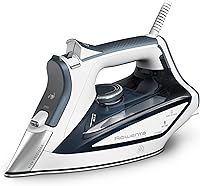
For a dress that needs creases set rather than removed, read how to use a steam iron so you know when a flat plate does the job better than a steamer.
How do you steam a dress without burning it or leaving marks?
Keep the head moving and never rest it on the cloth. Steam burns come from a stationary head held against the fabric, not from the steam itself.
A steady sweep at an inch or two gives the fibers time to relax without concentrating heat in one spot.
Watch for two marks in particular. Water droplets leave rings on silk and dark cottons, so shake the head clear before each pass.
Shine comes from pressing a hot head against a finish, so keep the delicate spacer fitted on satin and anything with a sheen.
On a dress with sequins or glued trim, drop to the lowest setting and use more distance. Direct steam can soften the adhesive behind glued sequins and dull a metallic finish.
Hand-sewn beading tolerates steam better, but still keep the head off the beads.
What gear makes steaming a dress easier?
A stand and a good hanger do more for a dress than a bigger steamer. A dress hangs long and needs support at the shoulders, and a handheld head works best when the garment stays put.
These three products cover the common setups.
The Conair Turbo ExtremeSteam suits most closets. Its 1875 watts and 5 settings handle everything from chiffon to linen, and the 3-in-1 attachment adds a silicone band, a delicate spacer and a bristle brush.
For a wardrobe of long dresses and evening wear, the SALAV GS18 puts the steam on a stand. Its 1.8L tank runs up to 60 minutes, and the wheels and adjustable pole make a full-length dress easy to reach.
The TONINT hanger gives a handheld steamer a fixed stand. The 63-inch stand has clamps for pants and skirts, rotates 360 degrees and folds away, and the set includes an ironing glove.
Match the gear to your space. A handheld steamer and a door hook handle a single dress in a small apartment.
A stand and full-size unit pay off when you steam several dresses a week. Compare handheld garment steamers and standing garment steamers if you're choosing between the two.
How do you finish a dress after steaming?
Let the dress hang until it's fully dry and cool before you wear or store it. Damp fibers crease at the slightest fold, so give the steam time to leave the cloth.
A few minutes in open air is enough for a light dress, longer for a heavy wool coatdress.
Button or zip the dress only after it dries, since fastening damp fabric can set a crease down the front. Check the collar and cuffs in a mirror and touch up any missed spots with a short pass.
Hang the dress on a shaped hanger so the shoulders keep their line, and leave space around it in the closet. Steaming is also a light refresh, so it's a good step between wears for a piece you don't want to launder every time.
What mistakes should you avoid when steaming a dress?
The common errors are too much water, too much heat and too little patience. Overfilling the tank causes spitting and water marks.
A hot setting on a delicate fiber leaves shine.
Rushing the passes leaves the fabric damp and wrinkled again within the hour.
Don't steam a dress while wearing it if you can avoid it. Steam on skin feels hot, and the fit hides the very wrinkles you're trying to remove.
If you must steam it on, keep the head well away from your body and use the lowest setting.
Never steam a stained dress without treating the stain first, since heat can set a mark into the fiber for good. And don't store a dress straight off the steamer in a plastic bag; trapped moisture can cause a musty smell.
Which steamer should you use for your dresses?
A handheld steamer covers most dresses and most homes, so start there. The Conair Turbo ExtremeSteam has the settings, the spacer and the steam time to handle a single dress or a few in one session.
Its 20-minute tank is enough for a light wardrobe.
Step up to the SALAV GS18 when long dresses, evening wear or several garments a week make a stand worthwhile. Its hour of steam and 65-inch reach suit a full-length gown without arm strain.
The TONINT hanger bridges the two by giving a handheld steamer a fixed stand and clamps.
Learning how to use a garment steamer on a dress comes down to three habits: keep the fabric taut, keep the head moving and keep your distance. Do that and the dress comes off the hanger smooth, dry and ready to wear.
For a closer look at the full-size options, browse the garment steamer picks before you buy.
Frequently asked questions
Can you steam a dress that says dry clean only?
Often yes, but not always. Steam is gentler than an iron on most fabrics, yet some dry-clean-only pieces carry dyes or finishes that water vapor can affect.
Test an inside seam first and stop if the color or texture changes.
Do you steam a dress inside out or right side out?
Steam the inside first when the fabric is delicate or the finish is shiny, then do a light pass on the outside for the front and sleeves. Working inside out keeps the steam head from pressing marks into the face of the cloth.
How long should you wait after steaming before wearing a dress?
Give it a few minutes to dry while it hangs. Damp fibers crease easily, so let the fabric cool and lose its moisture before you sit down or layer anything over it.
A dress worn straight off the steamer can wrinkle again in minutes.
Can steam damage a dress with sequins or beads?
Direct steam can loosen glued trim and dull some finishes. Use the delicate spacer or steam from further away, keep the head moving, and never rest it on the embellishment.
Hand-sewn beads handle steam better than glued-on sequins.
Why does my dress look wrinkled again after steaming?
The fabric was still damp when you hung it up, or you steamed too fast and moved on before the fibers relaxed. Slow the passes down, keep the cloth taut, and let the dress finish drying in open air before you wear or pack it.
What water should go in a garment steamer for dresses?
Distilled water is the safest choice. It cuts mineral buildup inside the tank and keeps a fine white dust from settling on dark fabrics.
Tap water works short term, but hard water shortens the life of most steamers.