8 Best Irons for Sewing and Quilting Rooms (October 2026)
The best irons for sewing and quilting include the Rowenta Focus Excellence Steam Iron for garment sewing, the Oliso M3Pro Project Mini Iron for dark patchwork, and the Oliso TG1600 ProPlus Steam Iron for marathon quilting.
On this page (5 sections)
The best iron for sewing depends on whether you press long seams, small quilt blocks, garment panels or all three. The Rowenta Focus Excellence is a strong full-size choice, the Oliso M3Pro is made for precise project work, and the TG1600 ProPlus adds features for long pressing sessions.
A sewing iron earns its space by making pressing easier to control. Look at the size of the soleplate, cord reach, heat controls, steam options and safe resting place, then match those features to the fabrics and pieces you handle most.
A mini iron is convenient for seams and travel, but it covers less fabric with each pass. If garment sewing and everyday laundry share one workspace, a full-size model may be the more useful single iron.
For more on the compact Oliso, see our Oliso M3Pro Project Mini Iron review. If your workspace setup makes cord reach a priority, our cordless iron vs corded iron guide explains the trade-offs.
Our picks at a glance
-
1
-
2

-
3

- 4
 Best for heavy creasesCheck it
- 5
 Best for mixed fabricsCheck it
- 6
 Check it
Dritz Mighty Travel Steam Iron
Best for dorm craft kits - 7
 Check it
Quilted Bear Premium Mini Steam Iron
Best for protected packing - 8
 Best for ceramic soleplatesCheck it
Which best iron for sewing fits your project?
The Rowenta Focus Excellence is the best all-around fit here for a sewing room that also presses garments. Choose a smaller iron for seam detail and portability, or a long-session model when its cord, tank or resting system matches your routine.
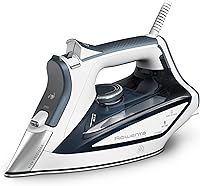
Rowenta Focus Excellence Steam Iron: Best for garment sewing
- 400+ Microsteam holes
- 180 g/min steam boost
- LED display with 5 fabric presets
- 8-foot retractable cord
A full-size iron with a stainless steel soleplate, LED fabric presets and a retractable cord. It suits a sewing room that also handles regular garment pressing.
Pros
- LED display with 5 fabric presets
- Retractable 8-foot cord
- Automatic shut-off and anti-drip system
Cons
- Full-size footprint may feel bulky for small seam work
The Rowenta Focus Excellence Steam Iron suits a sewing room that also handles everyday garment pressing. Its stainless steel soleplate has 400+ Microsteam holes, and the LED display offers 5 fabric presets.
The 8-foot cord retracts at the press of a button, which helps keep a shared laundry and craft area tidy after pressing. Automatic shut-off and anti-drip protection add practical features for a workspace where you may pause to reposition fabric.
Its full-size shape is easier to justify for garments, yardage and broad quilt sections than for a tiny pressing station. Skip it if most of your work is opening short seams or pressing small blocks, where a project iron is easier to place and store.
Oliso M3Pro Project Mini Iron: Best for dark patchwork
- 2-inch precision tip
- Built-in LED light
- 3-position fabric selector
- 2 lb body
The palm-sized iron pairs a narrow precision tip with a light that illuminates fabric ahead of the soleplate. It fits seam work, quilt blocks and small craft spaces.
Pros
- LED helps light the area ahead of the soleplate
- Compact size for project work and travel
- Dual voltage
Cons
- Smaller soleplate covers less fabric per pass
The Oliso M3Pro Project Mini Iron is the pick for detail work where a pointed tip and better visibility help. Its 2-inch tip reaches into seams and bindings, and a built-in LED light illuminates the area ahead of the soleplate.
At 2 lb, the palm-sized iron is easy to move between a sewing table and a travel bag. Its 3-position selector covers synthetic, silk or wool, and cotton or linen settings.
The small soleplate means slower coverage on large pieces, so this is a project tool rather than the most efficient one-iron choice for garments and yardage. Choose it for seam allowances, quilt blocks and close work, or skip it if you mainly press broad panels.
Oliso TG1600 ProPlus Steam Iron: Best for marathon quilting
- iTouch Auto-Lift system
- 12-foot swivel cord
- 12.75 oz side-fill tank
- 2-inch precision tip
The Auto-Lift system raises the iron when you release the handle, while a long swivel cord and large side-fill tank suit extended pressing sessions.
Pros
- Auto-Lift raises the iron when released
- 12-foot swivel cord
- Large side-fill tank
Cons
- Larger and heavier than a project mini iron
The Oliso TG1600 ProPlus Steam Iron suits long quilting sessions where a long cord and hands-free lifting feature have value. The iTouch Auto-Lift system lowers when you touch the handle and raises when you release it.
Its 12-foot swivel cord gives reach around a work area, and the side-fill tank holds 12.75 oz for longer stretches between fills. A 2-inch precision tip also helps with seams and layered quilt blocks.
At 3.7 lb, it is heavier than a project mini iron and takes more room on a small board. Skip it if compact storage or light weight matters more than a long cord and Auto-Lift.
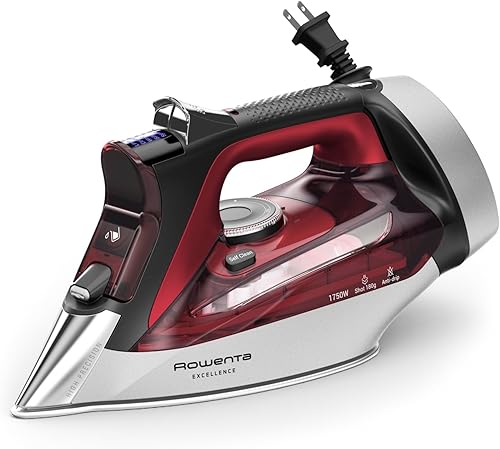
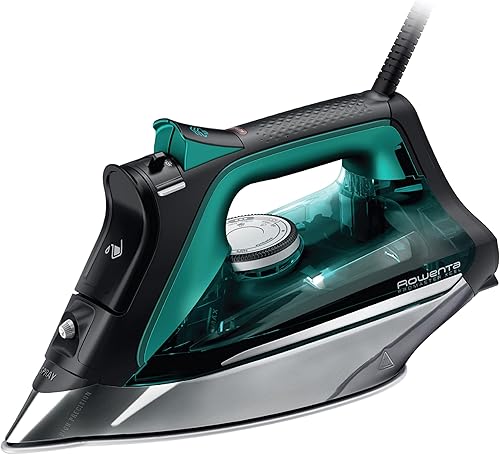
Rowenta Pro Master Steam Iron: Best for heavy creases
- 430 steam holes
- 210 g/min steam shot
- Anti-calc system
- Automatic shut-off
A full-size steam iron with a precision tip, anti-calc system and a large water tank. It fits sewists who want to switch between project pressing and household garments.
Pros
- 430 steam holes
- Anti-calc system
- Transparent water window
Cons
- Cord length is not specified in the product information
The Rowenta Pro Master Steam Iron suits projects with stubborn creases and broad areas to press. It has 430 steam holes, a 210 g/min steam shot, an anti-calc system and automatic shut-off.
Its precision tip helps reach around seams and garment details, while a transparent water window makes the water level easy to see. The large refill opening is convenient when topping it up between sessions.
This is a full-size iron for a sewing area that also handles household laundry. Skip it if your routine is mainly small blocks, where a mini iron may be easier to lift and reposition; its cord length is not specified, so check that reach against your workspace before choosing it.
Singer SteamCraft Steam Iron: Best for mixed fabrics
- OnPoint precision tip
- 5 fabric settings
- 300 ml water tank
- 10-foot swivel cord
Five fabric settings and steam controls support projects that move between different materials. The precision tip is designed for work around seams, buttons and pleats.
Pros
- Five fabric settings
- Steam can be toggled on or off
- 300 ml transparent tank
Cons
- Heavier than the mini project irons
The Singer SteamCraft Steam Iron is a useful match for projects that move between fabrics and need a clear heat selector. Its dial has 5 fabric options, and its OnPoint tip is designed for work around buttons, seams and pleats.
Steam can be switched on or off, which gives you more control when pressing quilts or delicate material. The 10-foot swivel cord and 300 ml transparent tank support longer sessions with fewer repositioning breaks.
At 3.3 lb, it is a full-size iron rather than a travel tool. Choose it for fabric options and steam control, or skip it if you need a small iron for a compact craft table.
Dritz Mighty Travel Steam Iron: Best for dorm craft kits
- Compact 6 x 3.5 in size
- Dual voltage
- Non-stick soleplate
- Storage bag and measuring cup included
This compact iron is made for craft, dorm and travel use, with a non-stick soleplate and dual voltage. Its small size suits appliqué and bias tape work.
Pros
- Small footprint for detailed craft work
- Dual voltage
- Includes storage bag and measuring cup
Cons
- Smaller body means less coverage than a full-size iron
The Dritz Mighty Travel Steam Iron suits a small craft station, dorm room or travel kit. Its 6 x 3.5 x 3.5 in shape and dual-voltage design work well for appliqué, bias tape and other focused pressing jobs.
It has a non-stick soleplate and comes with a storage bag and measuring cup. Those accessories help keep a compact kit together when you move between a home workspace and travel.
A travel iron covers less fabric per pass than a full-size model. Choose it for detail work and portability, or skip it if you need to press large quilt tops quickly.
Quilted Bear Premium Mini Steam Iron: Best for protected packing
- 5.2 x 3.2 in size
- Dual voltage
- Hard shell travel case
- Iron rest and water cup included
A compact mini iron with a case, iron rest and water cup. It is a practical fit when your sewing tools need to pack away between uses.
Pros
- Hard shell travel case
- Includes iron rest and water cup
- Dual voltage
Cons
- Mini size covers less fabric than a full-size iron
The Quilted Bear Premium Mini Steam Iron is a good fit for a portable sewing kit that needs protected storage. It measures 5.2 x 3.2 in and includes a hard shell case, iron rest and water cup.
Its 120V/240V options support travel, and the compact format can fit a small sewing table where a full-size iron would take too much room. The 408 W design is suited to focused pressing tasks.
The small soleplate calls for more passes on larger pieces. Pick it when a case and separate rest are useful, or skip it if speed across broad fabric matters most.
Quilted Bear Mini Steam Iron: Best for ceramic soleplates
- Ceramic soleplate
- Dual voltage
- Travel case and water cup included
- 408 W
This mini iron includes a travel case and water cup, with a ceramic soleplate and dual voltage. Choose it for portable project pressing rather than broad fabric coverage.
Pros
- Ceramic soleplate
- Dual voltage
- Travel case and water cup included
Cons
- Mini format is less suited to large fabric pieces
The Quilted Bear Mini Steam Iron is a basic compact option for travel and small project work. It has a ceramic soleplate and dual-voltage design, with a travel case and water cup included.
Its mini format works for quick seam work or as a backup iron stored with craft supplies. The 408 W model is better suited to focused pressing than broad fabric sections.
Choose it if you want a portable kit with a ceramic soleplate. Skip it if you want an included iron rest or often press large pieces, since its smaller surface means more passes.
How should you choose the best iron for sewing?
The best iron for sewing is the one that handles your most common task without making the rest of your setup harder to use. Start with project scale, then consider fabric controls, cord reach, steam needs and where the hot iron will rest.
Which best iron for sewing handles your project size?
A full-size iron covers garment panels and broad quilt sections with fewer passes, while a mini iron is easier to guide around small seams. If you make both garments and quilts, a full-size iron plus a small project iron can handle those different jobs.
A compact iron is not automatically the best choice for quilting. It gives you control on details, but a large top will take longer to press.
What fabric controls help with sewing and quilting?
Fabric controls help you choose a suitable heat setting as you move between materials. The Oliso M3Pro has 3 selector positions, while the Singer SteamCraft offers 5 fabric options.
Use the material’s care instructions as your guide, and press a scrap or hidden section first when unsure. Don’t rely on a higher setting to speed up work on fabric that needs gentler heat.
How much cord reach does a sewing iron need?
Cord reach should suit your outlet, board and sewing table. The Rowenta Focus Excellence and Oliso M3Pro have 8-foot cords, while the TG1600 ProPlus has a 12-foot swivel cord.
A swivel cord can make it easier to change direction without twisting the cable. If you want to compare movement without a cord, read our best cordless steam irons guide.
Should you use steam while pressing sewing projects?
Steam can help relax some wrinkles, but not every fabric or sewing step calls for moisture. The Singer SteamCraft lets you turn steam on or off, while other picks provide steam output or bursts.
Check the fabric care guidance before pressing, especially on a finished garment or quilt block. For a fuller routine, see our guide to cleaning and descaling a steam iron.
Where should you rest an iron between seams?
Set the iron on a stable, heat-safe rest when you pause to move fabric or prepare the next piece. The Oliso M3Pro includes a silicone Solemate, and the Quilted Bear Premium Mini includes an iron rest.
Keep the cord clear of the soleplate and fabric edges. Use the supplied rest and shut-off features as directed for the model you choose.
How do you set up and care for a sewing iron?
A safe, clear pressing area makes seam work easier and helps prevent accidental contact with hot surfaces. Set up your board or pressing surface, water and iron rest before plugging in, then let the iron reach the setting you need.
Place the iron where its cord can reach without crossing the area where you cut or handle fabric. Keep pins, loose threads, paper and scraps away from the soleplate, and leave room to move fabric without pulling the iron.
Fill the tank according to the iron’s instructions if you plan to use steam. Use the iron’s fabric selector and your fabric care guidance, and avoid filling or emptying it while the soleplate is hot unless its instructions say that is safe.
After a session, switch off and unplug the iron, let it cool on a stable surface, and empty or store it as the instructions direct. Follow the model’s cleaning guidance; irons with mineral-control or self-clean features still need the care steps in their manuals.
What sewing iron mistakes should you avoid?
The most common mistake is using a mini iron for every task simply because it is easy to store. Small irons are handy for details, but they make broad garment panels and quilt tops slower to press.
Another mistake is choosing by steam output alone. Heat control, soleplate size, cord reach and resting space can matter more to daily sewing than a large steam burst.
Don’t assume every fabric should be pressed with steam or at high heat. Follow the care guidance, test a hidden scrap if uncertain, and use the appropriate selector setting.
Avoid letting the cord cross your fabric or workspace, where it can catch as you reposition a project. Return the iron to a stable rest whenever you stop pressing.
Which sewing iron should you choose?
Choose the Rowenta Focus Excellence if you need a full-size iron for sewing and garments, with fabric presets and a retractable cord. Pick the Oliso M3Pro for precise seams, small blocks and travel, or the TG1600 ProPlus for extended sessions where its Auto-Lift and long swivel cord are useful.
Choose the Singer SteamCraft when fabric options and steam control are your priorities. The Dritz and Quilted Bear minis suit travel or small craft setups, with the Premium Mini adding a hard case and iron rest.
For an everyday household alternative, compare our best iron for clothes at home. If garment pressing is also part of your routine, our guide to using a steam iron explains the basic steps.
Match the best iron for sewing to the area you press most: compact control for seams and blocks, or a full-size soleplate for garments and broad fabric.
Our top 3 picks at a glance
-
1
-
2
-
3
Frequently asked questions
What kind of iron is best for sewing?
The best iron for sewing depends on your project size and the detail you press most. A full-size model covers broad fabric more quickly, while a project iron with a precision tip is easier to place along seams and quilt blocks.
Check cord reach and where the iron can rest between presses.
Is a mini iron enough for quilting?
A mini iron can handle seams, bindings and small quilt blocks, but it takes more passes across large fabric sections. Keep a full-size iron for broad pressing if you work with large pieces often.
A light or precision tip can help on close detail work.
Do I need steam for sewing and quilting?
Steam can help relax wrinkles in fabric, but some projects call for dry pressing or less moisture. Choose an iron with a steam control if you want to switch between those needs.
Follow fabric care guidance and press a hidden scrap first when you are unsure.
How long should an iron cord be for a sewing room?
A longer cord gives more reach around a cutting or ironing surface, but the right length depends on your outlet and work area. These picks include cords from 8 to 12 feet where specified.
Keep the cord clear of the soleplate and the edge of your work surface.