Panasonic vs Rowenta Cordless Iron: Which Is Better? (October 2026)
For a Panasonic vs Rowenta cordless iron, choose Panasonic for all-direction pressing and a carrying case, or Rowenta for its stated quick heat-up and steam-mode reheat. Pick by the work you do and how often you can return the iron to its base.
On this page (11 sections)
- Panasonic vs Rowenta cordless iron: what should guide your choice?
- Which Panasonic model fits sewing and quilting?
- How do the stated heat-up and reheat times compare?
- What soleplate design works for your fabrics?
- Which iron is easier to carry and store?
- Can you use these irons for curtains and hanging clothes?
- How should you set up and use a cordless iron?
- What common mistakes interrupt cordless ironing?
- Does a cordless iron fit your routine?
- Which Panasonic vs Rowenta cordless iron should you choose?
- Frequently asked questions
Choose Panasonic for all-direction soleplate movement and a heat-resistant case, or Rowenta for its stated quick heat-up and steam-mode reheat. In this Panasonic vs Rowenta cordless iron comparison, the right pick depends on what you press, where you store the iron and how often you can return it to its base.
All 3 irons lift off a power base for pressing and return to it for heat recovery. Panasonic offers two models, the NI-WL700A and NI-QL1100L; Rowenta’s Freemove is the option with the shortest stated heat-up and reheat intervals.


Panasonic vs Rowenta cordless iron: what should guide your choice?
Choose by work pattern first: Panasonic suits frequent changes of direction and storage needs, while Rowenta suits buyers who value its stated short heating intervals. Both brands require you to return the iron to its base during use.
The Panasonic NI-WL700A and NI-QL1100L have double-tipped soleplates designed to move forward, backward and side to side. Both come with heat-resistant cases that snap onto the iron and base.
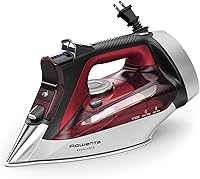
Rowenta describes a 30-second heat-up and about 10 seconds to reheat in steam mode. Its stainless steel soleplate has 400 micro-steam holes.
A cordless iron works best when the base can sit within easy reach of your ironing surface. If you press a large batch without pauses, think carefully about the repeated lift, press and return rhythm before choosing cordless.
Which Panasonic model fits sewing and quilting?
The NI-QL1100L is the clearest Panasonic fit for sewing details because its curved, double-tipped soleplate is shaped for seams, plackets, cuffs and collars. The NI-WL700A is a better match if you want a stated heat-up time and working-time figures.
The NI-QL1100L’s tip and curve suit narrow garment sections where you need to guide the iron around stitching or edges. Its cordless design also removes a cord from the work area while you rotate fabric panels.
For quilt blocks or larger fabric sections, the NI-WL700A offers a contoured 360° soleplate for movement in multiple directions. It heats to high temperature in under 2 minutes, according to Panasonic, and returns to the base for reheating during a heavy load.
Neither Panasonic model removes the need to manage the base. Leave room beside your pressing surface, and set the base where you can return the iron without reaching across fabric.
Compare more options in our best irons for sewing and quilting rooms.
How do the stated heat-up and reheat times compare?
Rowenta gives the shortest stated intervals, while the NI-WL700A has a separate heat-up and working-time description. These figures can help set expectations, but they refer to different steps in use.
Rowenta describes a 30-second heat-up and about 10 seconds to reheat in steam mode after the iron returns to its base. It says to return the iron when the indicator light blinks.
Panasonic says the NI-WL700A reaches high temperature in under 2 minutes. It also describes 1 minute of steam ironing or 5 minutes of dry ironing per charge, with the base used to reheat during heavier work.
Rowenta is rated at 1600W, while each Panasonic model is rated at 1500W. That small power difference is less useful for choosing than the soleplate shape, stated recovery interval and way you work.
What soleplate design works for your fabrics?
Panasonic’s double-tipped design suits back-and-forth and side-to-side movement, while Rowenta’s 400 micro-steam holes are its defining soleplate detail. Match those features to how you guide the iron across fabric.
Both Panasonic models have double-tipped soles designed for 360° movement. The NI-QL1100L is also described as curved and suited to detail areas such as seams and collars.
Rowenta’s stainless steel soleplate has 400 micro-steam holes intended to spread heat and steam. If you are comparing more cordless options, our best cordless steam irons guide covers additional designs.
Before pressing a garment, check its care label and select a suitable heat setting. Test an inconspicuous area when the fabric’s response is uncertain, and avoid leaving the hot soleplate in one place.
Which iron is easier to carry and store?
The Panasonic models have the clearest storage advantage because each includes a heat-resistant case that attaches to the iron and power base. Rowenta includes a charger base, but no carrying case is specified.
The NI-WL700A’s case snaps onto the iron and power base after use. Panasonic describes the NI-QL1100L’s matching case the same way, which helps keep the parts together for storage or travel.
Rowenta’s base supports its cordless use and automatic recharging. If you prefer to compare more models from that brand, see our Rowenta iron guide.
Set the base on a stable, clear surface before you start. Make sure the cord can reach an outlet without crossing the ironing area, and keep the hot iron away from fabric you are not pressing.
Can you use these irons for curtains and hanging clothes?
All 3 models offer vertical steam for hanging garments, and Panasonic also names curtains. This mode is useful for light touch-ups when an item is already hanging.
The NI-WL700A and NI-QL1100L both have vertical steam features. Rowenta also describes vertical steaming for quick touch-ups.
Vertical steam is not a replacement for a firm press when a crease needs a flat surface and direct pressure. For a broader choice between steaming and pressing, read steamer or iron for clothes.
Hang the item securely and keep the soleplate and steam away from your hands and face. Follow the manual’s directions for filling, steaming and resting the iron.
How should you set up and use a cordless iron?
Set up a cordless iron with the base close to the work, then use short pressing passes and return the iron when its heat needs recovery. This keeps the cordless routine predictable and gives the iron a safe resting place.
Start with a clear ironing surface, an outlet within reach and the base positioned on a stable spot. Read the manual for water filling, heat settings and steam controls before switching on, since details can vary by model.
Sort garments by the heat level on their care labels, beginning with items that need lower heat. Smooth each section before pressing, and use the iron’s dry setting when steam is not needed.
Return the iron to its base between sections or when Rowenta’s indicator light blinks. For the NI-WL700A, allow for more frequent base returns when using steam than when dry ironing, based on Panasonic’s stated working times.
What common mistakes interrupt cordless ironing?
The most common mistake is treating a cordless iron like a corded one and expecting it to stay at working heat without returning to its base. Build base returns into the order of your passes.
A second mistake is placing the base too far from the garment. Keep it beside the board or pressing table, but outside the path where you move fabric or reach for other tools.
Avoid choosing by wattage alone. The 100W difference between Rowenta and Panasonic does not explain the shape of the soleplate, the stated heat recovery or whether a carrying case matters to you.
Do not use vertical steam as if it were a full press. For stubborn creases, lay the garment flat and use the correct setting, or compare with a corded setup if you need longer uninterrupted pressing.
Does a cordless iron fit your routine?
A cordless iron fits best when freedom to turn and reposition fabric is worth pausing to return the iron to its base. For long, steady batches, a corded model may keep the work moving with fewer interruptions.
For quilting, sewing or broad fabric panels, a trailing power cord can get in the way when you rotate the piece. Panasonic’s double-tipped soleplates are designed for these direction changes, and the included case helps if you store or carry the iron.
For several garments in one session, each base return becomes part of the rhythm. Compare that routine with a corded design in our cordless iron vs corded iron comparison.
Cordless can also suit quick touch-ups around a home, especially when you value vertical steam. Keep a safe space for the base and accept that an iron needs to rest there to recover heat.
Which Panasonic vs Rowenta cordless iron should you choose?
Choose the NI-QL1100L for sewing details, the NI-WL700A for its stated heat-up and working-time figures, or the Rowenta Freemove for its stated short reheat. Skip cordless models if base returns would interrupt your regular pressing routine.
The NI-QL1100L makes the most sense for seams, cuffs, collars and quilting pieces. Pick the NI-WL700A if you want its under-2-minute heat-up description and a heat-resistant case for storage or carrying.
Pick Rowenta if its stated 30-second heat-up and about 10-second steam-mode reheat fit your pace. If you want broader context before deciding, start with our steam iron guide.
Frequently asked questions
Is Panasonic or Rowenta better for quilting?
Panasonic is the stronger fit for quilting if you turn fabric often or want a case to keep the iron and base together. Both Panasonic models have double-tipped soleplates designed to move in every direction and include heat-resistant carrying cases.
Plan to return the iron to its base as you work.
Which cordless iron heats up faster?
Rowenta describes a 30-second heat-up and about a 10-second reheat in steam mode. Panasonic gives an under-2-minute heat-up for the NI-WL700A, while no specific heat-up interval is stated for the NI-QL1100L.
These figures describe different parts of the heating cycle.
Can these cordless irons steam hanging clothes?
All 3 models offer vertical steam for touch-ups on hanging garments. Panasonic also names curtains as a use for its vertical steam feature.
Use this mode for light finishing and follow the iron’s instructions, since hot steam can burn skin.
Do cordless irons stay hot continuously?
Cordless irons need to return to a power base during use to regain heat. Panasonic says the NI-WL700A provides 1 minute of steam ironing or 5 minutes of dry ironing per charge.
Rowenta describes about 10 seconds to reheat in steam mode.
Which Panasonic cordless iron should I choose?
Choose the NI-QL1100L if sewing details such as seams, cuffs and collars matter most. Choose the NI-WL700A if you want its stated under-2-minute heat-up and a case for storage or carrying.
Both have double-tipped soleplates and vertical steam.