Steamer or Iron for Clothes: Which One to Buy
Choose a steamer for clothes to smooth hanging garments and handle quick touch-ups; choose an iron for sharp creases and flat pressing. A handheld, standing or 2-in-1 steamer fits different routines.
On this page (12 sections)
- Is a steamer or iron better for clothes?
- What does a clothes steamer do well?
- What does an iron do better?
- Can one appliance steam and iron?
- Which tool suits your clothes and routine?
- How should you choose a steamer for clothes?
- How do you set up and use a clothes steamer?
- What common steaming mistakes should you avoid?
- How do you care for a steamer or iron?
- Should you buy a steamer or an iron for clothes?
- Which tool is easier for beginners?
- Can you steam clothes instead of washing them?
A steamer for clothes is the better choice for smoothing hanging garments and quick touch-ups; an iron is better for crisp creases and flat pressing. If both tasks are part of your week, a 2-in-1 appliance can cover both, provided its handling and steam time suit your routine.
Start with the finish you want. Dresses, blouses and jackets are often easier to steam on a hanger, while trousers, shirt cuffs and structured seams usually benefit from an iron and a flat surface.
The short answer is simple: choose a steamer for convenience and drape, an iron for definition, or a combination if you regularly want both. For a fast garment refresh, see how to remove wrinkles from clothes.
Is a steamer or iron better for clothes?
A steamer is better for smoothing hanging clothes; an iron is better for a sharp, pressed finish. Match the tool to the result you want rather than expecting one method to work equally well on every garment.
A steamer directs hot vapor toward fabric, relaxing wrinkles while the garment hangs. That setup helps when you want to avoid placing each item flat on an ironing board.
An iron presses fabric between its heated soleplate and a stable, flat surface. Direct contact gives you more control over edges and creases, especially on structured clothing.
| Your usual task | Better starting point | Why |
|---|---|---|
| Smooth a shirt or dress before leaving | Handheld steamer | Work vertically with the garment on a hanger |
| Press trousers with a crease | Iron | A soleplate and board give direct, flat pressure |
| Refresh several garments in one session | Standing steamer or iron | Choose based on whether you prefer hanging or flat work |
| Handle touch-ups and some flat pressing | 2-in-1 steamer and iron | Combines vertical steaming with a heated plate |
| Press shirt collars and cuffs | Iron or 2-in-1 | Flat contact helps create a sharper edge |
If you're comparing iron styles, our steam iron vs dry iron guide explains what steam adds to flat pressing.
What does a clothes steamer do well?
A clothes steamer is useful for light wrinkles, hanging garments and quick refreshes. You can work without laying every piece on a board, which makes steaming convenient for garments that are awkward to flatten.
A handheld steamer is easy to store and bring out for one or two garments. Before choosing one, think about how many items you expect to finish in one session and whether you need a cord long enough to reach your hanging space.
Its removable 7.3 oz tank provides up to 20 minutes of continuous steam. Three attachments serve different fabric needs: a silicone band pulls fabric taut, a bristle brush helps with thicker fabric, and a delicate fabric spacer protects fragile garments.
For more on compact models, see our best handheld garment steamers guide. A handheld unit makes sense when you want a stored-away tool, while frequent sessions across many clothes can call for a larger reservoir.
A standing steamer keeps a garment on a hanger and provides a larger tank for longer sessions. Its base, pole and hanger need a storage spot, so measure where it will live before choosing one.
The SALAV can fit a home routine that includes repeated steaming of clothes, curtains or other larger fabrics. Skip a standing model if you lack floor space or usually want to smooth only one item at a time.
Steam can soften the look of wrinkles, but a steamer may not create a crisp trouser crease. Deep wrinkles in thicker fabric can take repeated passes, so check the garment's care label and allow enough time for the finish you want.
For hanging technique on a delicate garment, read how to steam a dress without ruining it.
What does an iron do better?
An iron is the stronger choice when you want crisp edges, creases and a smooth flat finish. Its soleplate presses fabric directly against a board, giving you control over seams, hems and collars.
That contact is useful on shirts and trousers, where a soft drape is not the goal. It also means you need a stable, heat-safe work surface and time to position the garment.
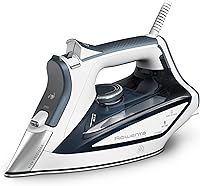
The Focus Excel has continuous steam up to 35 g/min and a boost up to 135 g/min. Its soleplate has over 400 holes, and its self-cleaning, anti-calc and auto-off features support regular home ironing.
Choose it if you already have a suitable board and often press shirts, trousers or other structured pieces. Skip a dedicated iron if board setup is the part of garment care you want to avoid and most of your clothes only need a quick hanging touch-up.
For a clear routine on shirts, follow our guide to ironing a dress shirt. If you're deciding whether a board is necessary, how to iron without an ironing board covers alternatives and precautions.
Can one appliance steam and iron?
A 2-in-1 appliance can handle vertical steaming and horizontal ironing in one unit. It suits households that need both options but want one appliance to store.
The Pure Force has a 7.1 oz tank that provides up to 12 minutes of continuous steam. Its cord is 8.5 ft long, and it has an auto-off feature.
Choose it if you want the flexibility to steam a hanging garment and press a flat section without switching appliances. Skip it if your sessions are long enough that a larger tank matters, or if you prefer a full-size iron for repeated crease work.
A combination unit still has to feel manageable for both tasks. Consider where you'll hold it, how you'll refill it, and how long your usual session lasts before deciding that fewer appliances are worth the trade-off.
Which tool suits your clothes and routine?
Choose by the garments you handle most and the finish you want. The right tool is the one that matches the jobs you repeat, whether that means smoothing a jacket or pressing a stack of shirts.
Is a steamer for clothes right for dresses and jackets?
A handheld steamer suits many dresses and jackets because you can leave them on a hanger while working. It can also help with areas that are awkward to lay flat.
Keep the steamer moving and follow the garment's care label. Structured jackets may still need careful shaping, and steaming alone may not give lapels or trouser edges the definition you want.
For jacket-specific advice, see how to steam a suit jacket at home. A steamer is a good fit when the priority is smoothing a hanging jacket, not building a sharp crease.
Is an iron better for dress shirts and trousers?
An iron is a strong fit for dress shirts and trousers when you want smooth panels, defined cuffs or a sharp crease. The board gives you a firm surface, and a pointed soleplate helps you work around buttons and seams.
For trousers, line up the seams before pressing and work in sections. Our guide to ironing pants with a sharp crease walks through that process.
If you mostly wear shirts that need a crisp finish, choose an iron first. If you usually want to remove light wrinkles from a shirt before wearing it, a steamer may be easier to reach for.
What if you have limited storage?
A handheld steamer or compact iron can be easier to store than a standing unit with a pole and hanger. Measure your cupboard or shelf, and leave room for the cord and any attachments.
A standing model is most useful when it earns its floor space through frequent, longer sessions. If you don't have room to set it up and put it away, a compact tool is likely to fit your routine better.
What if you press clothes often?
A standing steamer may be convenient when you regularly refresh several garments at once. An iron may be more useful if your regular pile includes shirts, trousers or clothes that need creases.
Include setup time in your decision. A handheld steamer can be easy to reach for on one shirt, while an iron and board may make more sense when you already plan a longer flat-pressing session.
How should you choose a steamer for clothes?
Choose a steamer by session length, garment type, storage and control needs. Capacity and steam time matter for batches, while portability matters more when you handle one or two garments.
Start by picturing a typical session, not an ideal one. If you usually steam one blouse before work, a large upright unit may be more equipment than you need; if you routinely refresh several outfits, a small tank may mean frequent pauses.
- Garments: Dresses, jackets and hanging pieces often suit a steamer; trousers and structured shirts often suit an iron.
- Session length: Compare tank capacity and stated steam time when you plan to handle several pieces.
- Setup: A handheld unit needs a place to hang clothes; a standing model needs room for its base and pole.
- Controls: Settings can help tailor steam to different fabrics, but the garment care label still guides the safe method.
- Reach: Check the cord length against the distance from your outlet to your hanging or pressing area.
- Maintenance: Follow the appliance instructions for water choice, emptying and mineral care.
A bigger tank is useful only if you will use the extra steam time. A compact model may be the more practical choice if easy storage and quick access matter more than batch size.
How do you set up and use a clothes steamer?
Set up a steamer on a stable surface, fill it as its instructions direct, and hang the garment securely before switching it on. Keep the steam head moving and use a suitable attachment when the appliance includes one for the fabric.
Give the appliance its stated heat-up time before you begin. Check the water level first so you don't have to interrupt a session, and make sure the garment can hang freely without touching a surface that could be harmed by heat or moisture.
Hold the fabric taut where practical, then move the steamer over the wrinkle in controlled passes. Avoid pressing the steam head in one place or stretching delicate material while it is warm.
For an attachment-equipped handheld unit, match the attachment to its intended job. A brush can help with thicker fabric, while a spacer is intended to protect fragile garments, but the care label and appliance instructions remain the guide.
When you're done, turn the steamer off and let it cool as instructed. Empty and store it according to the manual, especially if the appliance's care directions call for draining water after use.
What common steaming mistakes should you avoid?
The common mistakes are ignoring the care label, holding steam in one place and starting with a poorly supported garment. A few checks before you begin can prevent a rushed touch-up from becoming a fabric or setup problem.
- Skipping the care label: Some fabrics or trims may not be suitable for steam. Check the garment's directions before choosing a method.
- Steaming a garment that cannot hang freely: Fabric needs room to fall so you can move the steamer without pressing the garment into a wall or other surface.
- Holding the head still: Keep it moving rather than concentrating steam on one spot.
- Expecting a crease from steam alone: A hanging steamer smooths fabric, but an iron and flat surface give more direct pressure for sharp edges.
- Buying by tank size alone: Consider storage, reach and the number of garments you actually handle.
- Leaving water in storage without checking instructions: Follow the appliance's guidance for emptying and care.
If your main goal is removing deep wrinkles from trousers, choose a pressing method that gives you a flat surface and direct control. A steamer is more appropriate when hanging convenience matters more than a sharply pressed line.
How do you care for a steamer or iron?
Follow the appliance manual for water, cleaning and storage, because care steps differ by model. Emptying a tank, managing mineral buildup and storing a cooled appliance correctly can help keep the routine straightforward.
Minerals can collect in appliances that heat water. Check whether your model calls for descaling or another cleaning method, and don't add cleaning products unless the instructions say to do so.
For an iron, use its self-cleaning or anti-calc features only as directed. Our guide to cleaning and descaling a steam iron explains common care steps, while the appliance manual should govern its specific process.
Should you buy a steamer or an iron for clothes?
Buy a steamer if you mostly want quick touch-ups on hanging clothes; buy an iron if you need sharp creases and flat pressing. Pick a 2-in-1 when both tasks come up often and its tank, cord and handling suit your sessions.
Choose a handheld steamer for occasional garments and easier storage. Choose a standing steamer for longer batches and frequent hanging work, if you have room to keep it.
Choose a dedicated iron when crisp shirts, cuffs and trousers are a regular part of laundry day.
If you want the convenience of steaming with some flat pressing, compare the 2-in-1 with the separate tools you would otherwise use. For more compact options, browse our best handheld garment steamers guide.
Which tool is easier for beginners?
A handheld steamer is often simpler for a quick touch-up, while an iron takes more care around heat and fabric contact. Both require you to follow the garment care label and appliance instructions.
Hang the garment securely before steaming and keep the steam head moving. With an iron, choose the right setting, work on a stable surface and avoid leaving the soleplate resting on fabric.
If you're learning to use an iron, our steam iron use guide covers a safe, orderly approach. For either tool, start with a garment you know is suitable for the method.
Can you steam clothes instead of washing them?
Steaming can smooth wrinkles and refresh a garment, but it doesn't replace washing when clothing is dirty. Follow the care label for cleaning and use steam only on suitable fabrics.
A steamer may help with a garment that needs a quick refresh between washes. It doesn't remove every stain or replace the cleaning method the fabric requires.
Frequently asked questions
Is a steamer or iron better for everyday clothes?
A steamer suits everyday clothes when you mainly want to smooth wrinkles on hanging garments. An iron is better when you want flat, defined creases in shirts, trousers or other pieces that need a pressed finish.
Choose by the result you reach for most often and the garments in your regular laundry.
Can a clothes steamer replace an iron?
A clothes steamer can replace an iron if most of your garment care is quick smoothing on a hanger. It may not create the crisp crease you want on trousers or shirt cuffs.
A 2-in-1 model adds a heated plate for some flat pressing, but consider whether it suits long sessions.
Does a steamer work on delicate clothes?
Steam can be useful on some delicate garments, but check the care label and appliance instructions first. Keep the steamer moving and test an inconspicuous area only if the garment's care guidance allows steaming.
Some fabrics or trims need low heat, a pressing cloth or professional care.
Should I buy a handheld or standing clothes steamer?
Choose a handheld steamer for occasional touch-ups, travel or easier storage. A standing steamer can suit frequent steaming of several garments or larger household fabrics because it has a larger tank and hanger setup.
Measure the storage space and consider how you'll move the unit before buying.
Can an iron remove wrinkles faster than a steamer?
An iron can smooth a flat section quickly because its heated soleplate presses fabric against a board. A steamer is convenient for a hanging garment, though thicker fabric may take more passes.
The faster choice depends on the garment, wrinkle depth and setup you prefer.