How to Iron Pants With a Sharp Crease
To learn how to iron pants with a sharp crease, align the inner and outer leg seams, then press from hem to waistband at the heat and steam level allowed by the care label.
On this page (10 sections)
- How do you iron pants with a crease step by step?
- How do you choose an iron for pants?
- How do you find the right crease line?
- What heat and steam should you use?
- How do you press a crease without making a shine mark?
- How do you press around pockets, pleats, and the waistband?
- What mistakes make pants harder to iron?
- Can you iron pants without an ironing board?
- How should you hang pants after ironing?
- Which iron should you choose for pants?
To iron pants with a sharp crease, align the inner and outer leg seams, then press the fold from the hem toward the waistband using the heat and steam allowed by the care label. Work one leg at a time, lifting the iron between sections instead of dragging it over the fabric.
The right iron should give you useful temperature control, a soleplate that glides smoothly, and a tip that can reach seams and pockets. Before choosing a tool, check whether you need a defined crease, how often you press trousers, and whether your pants allow heat and steam.
How do you iron pants with a crease step by step?
Lay one leg flat, align its seams, and press the crease in short sections from the hem upward. Check the care label first, since fabric type alone may not tell you the safest setting for a blend.
- Empty the pockets and close zippers or fasteners.
- Set up an ironing board and place one pant leg flat on it.
- Smooth the leg and match its inner and outer seams.
- Set the iron according to the care label; use steam only if allowed.
- Press along the fold from hem to waistband, lifting the iron as you move.
- Turn the pants and repeat on the other leg.
- Hang the pants with the legs straight until they cool fully.
The tip helps with narrow areas near the waistband, pockets, and seams. Keep the soleplate clear of buttons and zipper teeth so they don’t catch or leave marks.
How do you choose an iron for pants?
Choose based on the fabric settings and details you press most often. A clear control helps you match the care label, while a pointed tip is useful around pockets, pleats, and seams.
The CHI Steam Iron suits people who press a mix of fabrics and want electronic temperature control. It has an adjustable steam lever and a titanium-infused ceramic soleplate.
Its 8-foot retractable cord suits regular home pressing, while its digital controls and full-size design may not suit those seeking a compact travel iron or simple manual dial.
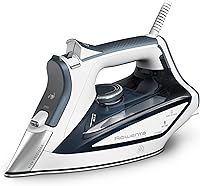
The Rowenta Pro Master fits frequent pressing sessions where you want a precision tip and a stainless steel soleplate. It includes an anti-calc system and automatic shutoff.
Its eco setting adds flexibility, while its full-size build and 3.3 lb weight may not suit those seeking a lightweight or cordless iron.
The Singer SteamCraft is a good match for sewing rooms and trousers with pleats or details around buttons. Its OnPoint tip and five fabric options on a heat selector suit detailed work.
Steam controls and a 300 ml tank support longer pressing tasks, while its dial and 10-foot swivel cord may not suit those wanting electronic temperature controls or a retractable cord.
For help choosing heat by fabric, see iron temperature for polyester, cotton, and silk. If you want to compare irons by their wider home-use features, start with the best iron for clothes at home.
How do you find the right crease line?
Match the inner and outer seams along the leg; the fold between them marks the crease. Smooth out twists before pressing so the line stays straight.
Start near the hem and check that the seams remain aligned as you move toward the thigh. If the leg twists, lift and reposition it instead of pulling the cloth into place.
Some pants have a crease only on the front, while others have front and back creases. Follow the existing folds and the garment’s design rather than creating extra lines.
What heat and steam should you use?
Use the care label to choose heat, and don’t use steam if the label warns against it. Fabric blends can react differently, so check the label even when you recognize one fiber.
If you’re unsure, try the iron briefly on an inconspicuous inside seam. Stop if you notice a change in color, texture, or sheen.
Steam can help relax wrinkles and set a fold, but it is not required for every pair of pants. For setup and safe use, see how to use a steam iron.
What should you check before ironing pants?
Check the care label, the iron’s controls, and the fabric before pressing a visible area. These checks help prevent scorch marks and folds in the wrong place.
Confirm that the label permits ironing, and note any limits on heat or steam. If it calls for reverse-side pressing, turn the pants inside out and use a pressing cloth when appropriate.
Fill and operate a steam iron according to its instructions. If you’re uncertain about its water requirements, read whether you need distilled water in a steam iron.
How do you press a crease without making a shine mark?
Use a clean, thin pressing cloth if the fabric looks delicate or tends to show shine. Press briefly, lift the iron, and move to the next section instead of rubbing the soleplate over the cloth.
Make sure the pressing cloth is clean and free of detergent residue or dye that could transfer. A dry pressing cloth also gives you a buffer when you need to reduce direct contact.
If a shiny patch appears, stop and let it cool. Repeatedly pressing the same spot can flatten the fabric further.
How do you press around pockets, pleats, and the waistband?
Keep the crease straight below the waistband and use the iron tip for narrow areas. Smooth the cloth before pressing so you don’t create an unwanted fold.
Avoid pressing directly over buttons or zipper teeth. If a pocket edge makes a ridge, reposition the leg so the pocket lies flat underneath.
Preserve existing pleats instead of pressing a new crease through them. A fresh fold can leave extra lines that are difficult to remove.
What mistakes make pants harder to iron?
The most common mistakes are guessing the heat, pressing twisted seams, and dragging the iron instead of lifting it. Each can leave a crooked crease, a shine mark, or an unwanted fold.
Don’t iron over an empty leg without checking that both seams line up. Don’t hold a hot soleplate in one place while trying to force out a stubborn wrinkle.
Avoid using high heat to compensate for a crease that won’t set. Check the label, reposition the leg, and press the fold in short sections.
Can you iron pants without an ironing board?
Use a firm, flat surface with a heat-safe pressing pad, and check that the iron’s instructions allow that setup. A soft bed or cushion can shift under pressure, making it harder to keep a crease straight.
Keep the iron away from edges, cords, and anything that could scorch. Never rest a hot iron directly on a floor, mattress, or table.
If you don’t have a stable heat-safe surface, wait until you can use an ironing board. For other options, read how to iron without an ironing board.
How should you hang pants after ironing?
Hang pants with the crease lines straight and let them cool fully before wearing or storing them. Cooling gives the pressed fold time to settle without being crushed.
Use a hanger that supports the waistband or clips the hems without leaving marks. Check that the legs hang freely and the creases still line up.
If a crease shifts, realign the seams and press only the affected section. For general wrinkle removal between wears, compare a steamer or iron for clothes based on whether you need a defined fold or a quick refresh.
Which iron should you choose for pants?
Choose the Rowenta for a precision tip, the CHI for electronic temperature control, or the Singer for detailed work around pleats and seams. Pick the features that match your fabric range and pressing habits.
For a crisp crease, the technique matters as much as the iron: follow the label, align the seams, and press from hem to waistband. Let the pants cool on a hanger, then use how to iron pants with a sharp crease only if you need a separate guide for pressing a shirt.
Frequently asked questions
How do you find the crease in dress pants?
Lay one pant leg flat and match the inner and outer seams along its length. The fold connecting those seam points is the crease.
If the pants have no pressed crease, check the garment's construction and style before making one; some casual pants are meant to stay flat.
Should you iron pants inside out?
Turn pants inside out when the care label or fabric calls for pressing on the reverse, or when you want to reduce shine on the outer face. For a visible crease, finish by turning them right side out, aligning the seams, and pressing through a clean cloth if needed.
Do you use steam to make a crease in pants?
Steam can help relax wrinkles and set a fold, but use it only if the care label allows steam for that fabric. Test an inconspicuous area first, keep the iron moving between presses, and avoid holding a hot soleplate on a delicate or heat-sensitive material.
How do you keep an ironed crease sharp?
Let the pants cool fully on a hanger before wearing or folding them. Keep the crease aligned with the seams, avoid crushing the legs in a crowded drawer, and follow the care label when refreshing the crease later.